
Fazua Ride 60 Review: Great Motor, Bad Investment

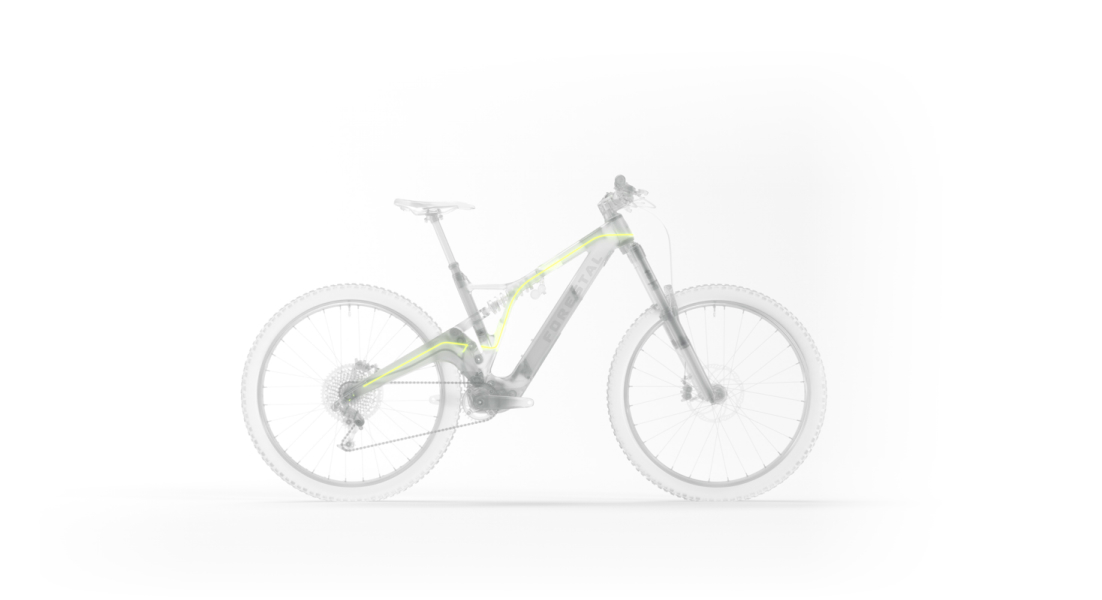
I’ve been wanting to write about the Fazua Ride 60 for a long time. Every time I ride a bike powered by this motor, I come away impressed. The numbers are excellent, the feel on the trail is convincing, and the engineering behind it is genuinely clever. Of all the lightweight motors I’ve tested, the Ride 60 is the one that made me think: this is what a light e‑bike motor should be.
So it pains me to write this article the way I’m about to write it. Because as good as the Fazua Ride 60 is as a piece of hardware, the situation surrounding the company makes it impossible to give a straightforward recommendation.
Let me start with what makes this motor so good — because it deserves that recognition — and then explain why the ground has shifted beneath it.
The motor: genuinely impressive
60 Nm in under 2 kg
The headline spec is hard to argue with. The Fazua Ride 60 delivers 60 Nm of torque — the highest of any lightweight mid‑drive motor — while weighing just 1.96 kg. For context, the TQ HPR50 offers 50 Nm at 1.85 kg, the Bosch SX provides 55 Nm at 2.0 kg. The Fazua gives you the most climbing power per gram of any motor in this category.
On steep, loose climbs — the kind where you need every newton meter to keep the rear wheel hooked up — those extra 10 Nm over the TQ and 5 Nm over the Bosch are not just numbers on paper. You feel them. The Ride 60 pulls you up gradients where lighter motors start to feel like they’re running out of breath.
430 Wh battery — the biggest in class
The internal battery is 430 Wh, which is the largest you’ll find in a lightweight e‑bike motor system. In mixed‑mode riding (alternating between eco and trail), I consistently get 40–65 km of real‑world range depending on terrain and temperature. That’s roughly 20% more than the TQ HPR50’s 360 Wh and significantly more than the Specialized SL’s 320 Wh.
For a lightweight motor, range anxiety is the constant companion. The Ride 60’s bigger battery pushes that anxiety back by a meaningful margin. On most mountain rides under 60 km, you simply don’t have to think about it.
Natural ride feel
The assist engagement is smooth and predictable. At normal pedaling cadences (75–90 rpm), the motor blends in naturally — not quite as ethereal as the TQ HPR50’s harmonic drive, but close. The power delivery is linear, without the surging or pulsing you get from some competitors. When you stop pedaling, the motor cuts cleanly.
At very low cadences (below 55 rpm), there is a slight lag in engagement that experienced riders will notice. It’s not a deal‑breaker, but it’s there — and it’s the main reason the TQ still edges ahead in pure ride feel.
Quiet operation
The Ride 60 is a quiet motor. There is a faint high‑pitched whine under heavy load — standing climbs in maximum assist — that some riders notice in direct comparison with the near‑silent TQ. In normal riding, it’s inaudible. You won’t hear it over trail noise, wind or your own breathing.
Good integration
Bikes built around the Ride 60 — the Forestal Siryon, Focus Jam² SL, Cairn BRAVe, various Bianchi models — are well‑designed machines. The motor’s compact dimensions allow clean frame lines, and most manufacturers have done a good job integrating the battery and display. Total bike weights typically land in the 16–18 kg range, which is excellent.
The Fazua app
Functional. You can adjust assist levels, set power curves and update firmware. It’s not as polished as Bosch Flow or Specialized Mission Control, but it does the job. The customization depth is adequate — you can tailor each assist mode to your riding style without feeling limited.
So what went wrong?
With specs like these, the Fazua Ride 60 should be our top recommendation for riders who want maximum climbing power in a lightweight package. A year ago, it was exactly that.
Two things changed.
The range extender that never came
When Fazua announced the Ride 60, the product roadmap included an optional 210 Wh range extender — a bottle‑cage‑mounted battery that would bring total capacity to 640 Wh. This was a big deal. It would have given the Ride 60 range comparable to full‑power e‑bikes while keeping the base weight low.
Riders bought Ride 60 bikes with the expectation that the extender would arrive. It never did. Fazua quietly confirmed the range extender was cancelled.
This was the first crack. A company that announces a product feature and then silently drops it is either struggling with engineering resources or losing focus. Neither is reassuring when you’re buying into a platform.
Porsche pulls out
The bigger blow came recently: Porsche has announced it will no longer invest in Fazua.
Some context: Porsche eBike Performance acquired Fazua in 2022. This was widely seen as a stamp of long‑term viability. Porsche brought capital, engineering resources and credibility. The Ride 60 was the first motor developed under Porsche ownership, and the quality showed.
That backing is now gone. Whether this means a full divestment, a wind‑down or a development freeze, the signal is clear: Porsche no longer sees Fazua as part of its future.
Why this changes the buying recommendation
An e‑bike motor is not a pair of brake pads. You don’t use it for a season and replace it. A motor needs to be supported for 5–10 years: firmware updates, spare parts (controllers, displays, battery cells), app maintenance, and a network of dealers who can service it.
Without continued investment, all of that becomes uncertain:
- Spare parts may become scarce in 3–5 years. Getting a replacement controller or display could become difficult or impossible.
- The Fazua app needs ongoing maintenance to keep up with mobile OS changes. If funding dries up, the app will eventually break — taking firmware updates and diagnostics with it.
- OEM adoption will decline. Bike brands plan 2–3 years ahead. Porsche’s exit will push manufacturers toward TQ, Bosch and Mahle for future models, shrinking Fazua’s ecosystem further.
- Resale value will drop as second‑hand buyers factor in platform risk.
None of this means your Fazua motor will stop working tomorrow. The hardware is solid. But it means you’re buying into a platform with an expiration date that nobody can see clearly.
The bargain exception — and it’s a big one
Here’s where I want to be very clear, because this matters:
If you find a Fazua Ride 60 bike at a serious discount — 30% off, 40% off, or more — buy it.
I mean it. At the right price, a Fazua‑powered bike is one of the best deals in the lightweight e‑bike market right now. Here’s why:
- The motor hardware is excellent. It will work reliably for years regardless of what happens to the company.
- The 60 Nm torque and 430 Wh battery are best‑in‑class specs that you cannot get from any other lightweight motor at any price.
- Dealers and shops will likely start discounting Fazua bikes heavily as the news spreads. Some already are.
- Even without future firmware updates, the current firmware is mature and stable.
- Worst case, you get 3–5 years of outstanding riding from a motor that, spec for spec, beats everything else in the lightweight category.
A Forestal Siryon or Focus Jam² SL at 35–40% off retail? That is an incredible bike for the money. You’re getting flagship‑level lightweight e‑MTB performance at mid‑range prices. The platform risk is real, but at that discount, you’ve already accounted for it.
Think of it like buying a discontinued car at a massive dealer clearance. The car still drives beautifully. The parts will be available for a while. You just wouldn’t pay full sticker knowing the factory is closing.
Watch for end‑of‑season sales, dealer clearances and second‑hand listings. The next 6–12 months will likely produce some exceptional deals on Fazua‑powered bikes.
What to buy instead (at full price)
If you’re paying retail for a new lightweight e‑bike, the safe choices are:
- TQ HPR50: the most natural ride feel of any motor, 50 Nm, 1.85 kg, backed by TQ Systems (a stable German industrial company). Slightly less torque than the Fazua, but the ride quality is sublime. Available in the Trek Fuel EXe, Pivot Shuttle SL and others.
- Bosch SX: 55 Nm, battery flexibility up to 800 Wh, the full Bosch Smart System ecosystem and an unmatched dealer network. The safe, versatile choice. Available in Scott, Cube and many others.
- Mahle X35+: for road and gravel riders who want invisible assist. A completely different proposition — rear hub, 40 Nm, near‑silent — but rock‑solid reliability and a stable company.
For the full breakdown, read our light e‑bike motor comparison.
Advice for current Fazua owners
If you already own a Fazua‑powered bike:
- Update your firmware now while the Fazua app is still actively maintained.
- Check your warranty terms and file any pending claims sooner rather than later.
- Ride and enjoy it. You own an excellent motor. The platform uncertainty doesn’t change the ride experience one bit.
The situation may evolve — another investor could step in, or Fazua could continue independently. But I wouldn’t make purchasing decisions based on hope.
Bottom line
The Fazua Ride 60 is, mechanically, one of the best lightweight e-bike motors ever made. The torque, the battery, the weight, the ride feel — it’s all there. I’ve genuinely enjoyed every ride on Fazua-powered bikes and part of me wishes I could simply write “go buy one.”
But motors don’t exist in isolation. They exist inside ecosystems of firmware, spare parts, apps and dealer networks — and that ecosystem is now on shaky ground. The cancelled range extender was the warning. Porsche’s exit is the confirmation.
At full price: no. Choose TQ, Bosch or Mahle.
At a deep discount: absolutely yes. Watch for deals, act fast, and enjoy one of the best lightweight motors on the market at a price that makes the risk worth taking.
Comparing the Fazua Ride 60 to Full-Power Motors
The lightweight motor category exists because many riders find full-power motors — the Bosch CX at 85 Nm, the Shimano EP801 at 85 Nm, the DJI Avinox at 105 Nm — to be overkill for their riding style. Understanding where the Fazua Ride 60 sits between lightweight and full-power systems helps buyers determine whether a lightweight motor is the right category for them at all.
Total system weight is the primary differentiator. A Fazua Ride 60 system (motor plus 430 Wh battery) adds approximately 5.5 kg to the bike. A Bosch CX system with a 750 Wh battery adds approximately 7.5 kg. A Shimano EP801 with a 630 Wh battery sits at about 6.8 kg. That 1.3 to 2.0 kg difference translates directly into bike handling characteristics. A 17 kg Fazua-powered bike handles noticeably closer to a conventional mountain bike than a 21 kg full-power e-MTB — the difference is most apparent during manual trail features, tight switchbacks, and any situation where the rider lifts or maneuvers the bike without motor assistance.
Climbing performance is where the 60 Nm torque ceiling becomes relevant. On gradients below 15 percent, the Fazua Ride 60 delivers climbing assistance indistinguishable from an 85 Nm motor — both push the rider up the hill comfortably. On sustained gradients above 20 percent with loose or rocky surfaces, the torque difference becomes tangible. The Fazua requires slightly more rider input to maintain momentum on steep technical climbs, whereas full-power motors carry more of the load. For riders whose local trails rarely exceed 20 percent gradient, this difference is academic. For riders in Alpine or similarly steep terrain, the additional torque of a full-power motor provides meaningful capability that a lightweight motor cannot match regardless of brand.
Battery range comparison further clarifies the trade-off. The Fazua’s 430 Wh battery delivers 40 to 65 km in mixed assist modes. A Bosch CX with a 750 Wh battery delivers 50 to 90 km in comparable riding conditions. Adding Bosch’s 250 Wh range extender pushes total capacity to 1,000 Wh — completely eliminating range anxiety for any single-day ride. The Fazua’s cancelled range extender means its 430 Wh capacity is the maximum, period. For riders whose typical rides exceed 60 km with significant climbing, this ceiling limits the Fazua to careful energy management that full-power systems with larger batteries simply do not require.
Real-World Ride Scenarios and Motor Behavior
Weekend Trail Ride (30-40 km, 800-1200m elevation)
This is where the Fazua Ride 60 excels without qualification. The motor provides ample assistance for moderately hilly trail rides, the battery lasts comfortably with 20 to 30 percent remaining at ride end, and the lighter weight means more fun on descents and flat sections where pedaling without assist feels natural rather than labored. Switching between eco mode on fire roads and trail mode on singletrack climbs optimizes the battery budget perfectly for this ride profile.
Long Mountain Ride (60-80 km, 2000m+ elevation)
This pushes the Fazua to its limits. Starting in eco mode and conserving battery for steep sections is essential. Running out of battery with 15 kilometers remaining is uncomfortable but manageable — the light system weight means pedaling home without assist is feasible, unlike a 23 kg full-power e-bike that becomes a very heavy conventional bike when the battery dies. For riders who regularly undertake rides in this range, the inability to carry extra battery capacity via a range extender is a genuine limitation.
Technical Enduro Riding (20-30 km, steep shuttled descents)
Short, intense rides with maximum climbing assist on steep access climbs followed by gravity descents. The Fazua handles this profile well — the battery easily lasts for 20 to 30 km regardless of assist level used, and the lower weight improves descending feel. The 60 Nm torque is adequate for steep climbs when the rider contributes meaningful pedaling effort. Riders who prefer to sit back and let the motor do all the work on 25-plus percent gradients will find the Fazua’s ceiling before a full-power motor, but active riders who pedal hard alongside the motor rarely feel limited.
Bikepacking and Multi-Day Tours
The Fazua’s 430 Wh battery and lack of range extender make multi-day bikepacking challenging. A full charge covers one day of moderate riding, requiring access to a power outlet each evening. Standard USB charging from a portable battery pack is not supported — the Fazua requires its dedicated charger, which weighs approximately 400 grams and takes four to five hours for a full charge from empty. For touring riders, the Bosch Smart System with its range extender option and widespread European dealer network for service remains the more practical platform.
Maintenance and Serviceability of the Fazua Ride 60
Day-to-day maintenance of the Fazua Ride 60 follows the same practices as any mid-drive motor system. The motor unit itself is sealed and requires no user-serviceable maintenance under normal conditions. The chain, cassette, and chainring wear at an accelerated rate compared to non-assisted bikes due to the additional torque — expect chain replacement every 1500 to 2500 kilometers rather than the 3000 to 5000 kilometers typical on conventional mountain bikes.
The battery charges via a proprietary charger that connects to a port on the downtube. Charging from empty to full takes approximately four to five hours with the standard charger. There is no fast-charging option available for the Fazua system, which is a limitation for multi-day touring where charging time at stops is limited.
The Fazua app provides battery health monitoring, showing state of health as a percentage of original capacity. Monitoring this figure annually reveals the battery’s degradation trajectory. A battery showing ninety percent state of health after two years of regular use is on a normal degradation curve and will continue providing useful range for several more years.
Dealer servicing for the Fazua motor is where the platform uncertainty becomes most tangible. As of now, authorized Fazua service centers exist in most European countries, but the concentration is lower than for Bosch or Shimano systems. A motor that develops an unusual noise or error code during a ride in a remote area may require transport to a service center rather than finding a nearby shop capable of diagnostics. For riders who frequently travel with their bikes, this service network thinness is a practical disadvantage.
Firmware updates through the Fazua app have addressed various issues since launch, including improved low-cadence engagement, optimized battery management algorithms, and refined assist curve profiles. The quality of these updates demonstrates that the engineering team produced genuinely good work — which makes the platform’s uncertain future more frustrating rather than less.
How the Fazua Compares on Hill Climbing Feel
The subjective experience of climbing with different motors is difficult to quantify but critically important for rider satisfaction. Three factors determine climbing feel: torque delivery smoothness, engagement speed when starting to pedal, and the motor’s behavior at varying cadences.
The Fazua Ride 60 delivers torque smoothly across its operating range. When maintaining a steady cadence between 70 and 90 RPM on a moderate grade, the motor feels like an invisible push rather than a mechanical assist. This natural integration is the Fazua’s strongest subjective quality and the characteristic that riders consistently praise above everything else.
At the extremes of its operating range, the Fazua reveals minor limitations. Very low cadences (below 50 RPM) on steep technical climbs produce a slight hesitation in motor engagement that experienced riders notice. The motor is not unresponsive at low cadence — it still provides assistance — but the assist feels less immediate than at higher spinning rates. Riders who prefer to grind slowly up steep sections will notice this more than riders who maintain a high cadence.
The TQ HPR50 offers marginally better low-cadence engagement due to its harmonic drive mechanism, while the Bosch SX provides slightly more forceful assistance at high torque loads. These differences are subtle enough that most riders would need direct back-to-back comparison to identify them, but they exist and matter for riders who prioritize a specific climbing style.
We have updated our light e-bike motor comparison to reflect this new reality.
Explore light e‑bikes and alternatives at our sports section.


