
Best Light e-Bike Motors Compared (2026)


Light e‑bikes blur the line between assisted and analog riding. The motor provides a subtle push on climbs without adding the bulk, weight or artificial feel of a full‑power system. If you want an e‑bike that still rides like a real mountain bike — one you can pedal comfortably with the motor off — the choice of lightweight motor is critical.
Quick answer: for trail riding with the most natural feel, the TQ HPR50 is unmatched in lightness and ride quality. For road, gravel and light trail riders who want near‑invisible assist, the Mahle X35+ is the stealthiest option. Budget buyers should look at bikes with the Bosch SX, which brings Bosch’s ecosystem and battery flexibility to the lightweight segment. Note: we previously recommended the Fazua Ride 60 as the torque leader, but following Porsche’s decision to stop investing in Fazua and the cancelled range extender, we can no longer recommend it at full price — only as a bargain buy.
What makes light e‑bike motors different
Before comparing individual motors, it is important to understand why this category exists and where it fits.
Full‑power e‑MTB motors (Shimano EP801, Bosch CX, DJI Avinox) deliver 85–105 Nm of torque and weigh 2.5–2.9 kg. They are designed for maximum assist on steep terrain. Light e‑bike motors sacrifice some torque (23–60 Nm) to save weight (1.5–2.0 kg), resulting in bikes that weigh 15–18 kg instead of 22–25 kg.
The trade‑off is clear: less assist on steep climbs, but a dramatically better unassisted ride. If your terrain is moderate, your fitness is decent and you want an e‑bike that doesn’t feel like one, a light motor is the right call.
For a comparison of full‑power motors, read our full‑power e‑bike motor comparison.
Quick comparison table
| Spec | TQ HPR50 | Fazua Ride 60 | Bosch SX | Mahle X35+ | Specialized SL 1.2 | Mahle X20 |
|---|---|---|---|---|---|---|
| Type | Mid‑drive | Mid‑drive | Mid‑drive | Rear hub | Mid‑drive (custom) | Rear hub |
| Max torque | 50 Nm | 60 Nm | 55 Nm | 40 Nm | 35 Nm | 23 Nm |
| Motor weight | ~1.85 kg | ~1.96 kg | ~2.0 kg | ~1.6 kg | ~1.95 kg | ~1.5 kg |
| Battery | 360 Wh (internal) | 430 Wh (internal) | 400–800 Wh | 250–350 Wh | 320 Wh (internal) | 250 Wh |
| Range extender | Optional 160 Wh |
|
PowerMore 250 Wh | Optional external | Optional 160 Wh | Optional external |
| Noise level | Very quiet | Quiet | Quiet | Near silent | Very quiet | Near silent |
| Ride feel | Very natural | Natural | Slightly assisted | Stealthy, subtle | Very natural | Barely noticeable |
| Customization | TQ App | Fazua App | Bosch Flow | OEM App | Specialized Mission Control | OEM App |
| Reliability sentiment | Excellent | ⚠️ Uncertain future | Good | Very good | Good | Very good |
| Estimated bike price | €6 000–€14 000 | €4 000–€10 000 | €3 500–€8 000 | €3 500–€8 000 | €5 000–€10 000 | €3 000–€6 000 |
TQ HPR50 — the featherweight champion

Specs at a glance: 50 Nm torque · ~300 W peak · 1.85 kg · 360 Wh internal battery · optional 160 Wh range extender
The TQ HPR50 is the motor that started the modern light e‑MTB revolution. Built by TQ Systems (a German industrial company), it uses a harmonic pin ring gearbox instead of traditional planetary gears, resulting in an incredibly compact and smooth drive unit. It powers premium bikes from Trek (Fuel EXe), Pivot (Shuttle SL), Scott (Lumen eRIDE), and Mondraker (Crafty Carbon SL).
What riders say online
- Ride feel: universally praised as the most natural‑feeling e‑bike motor available. When pedaling in low assist, it genuinely feels like a tailwind rather than a motor. This is the motor’s defining characteristic.
- Weight: at 1.85 kg, it is one of the lightest mid‑drive motors on the market. Bikes built around it (Trek Fuel EXe, Pivot Shuttle SL) weigh 16–18 kg — territory previously reserved for analog full‑suspension bikes.
- Noise: extremely quiet. Riders report that the motor is inaudible at normal riding cadences, even in maximum assist.
- Smoothness: the harmonic drive system eliminates the pulsing or surging common in planetary gear motors. Power delivery is linear and predictable through the entire cadence range.
- Reliability: the HPR50 has been on the market since 2022 and has built a strong reliability reputation. Motor failures are rare. The sealed unit design keeps out water and mud effectively.
- Battery life: the 360 Wh internal battery is the motor’s main limitation. Real‑world range is 30–55 km in mixed mode depending on terrain. The optional 160 Wh range extender (bottle‑cage mount) adds 15–25 km. Riders who do long alpine rides sometimes find this insufficient.
- Torque limitation: 50 Nm is adequate for moderate to steep trails but noticeably less than the Fazua Ride 60 (60 Nm) on very steep, loose climbs. Riders above 85 kg sometimes wish for more on sustained 20%+ gradients.
Verdict
Best for: experienced riders who want the lightest, most natural‑feeling e‑bike and accept the battery range trade‑off. If your rides are under 50 km with moderate climbing, the TQ HPR50 delivers an experience closer to analog riding than any other motor. The premium price reflects premium engineering.
Fazua Ride 60 — the torque leader ⚠️ (buyer beware)
May 2026 update: Porsche has announced it will no longer invest in Fazua, and the promised range extender for the Ride 60 was cancelled. While the motor hardware remains excellent, the platform’s long‑term future is uncertain. We can no longer recommend buying a Fazua‑powered bike at full price. Read our full analysis of the Porsche–Fazua situation.
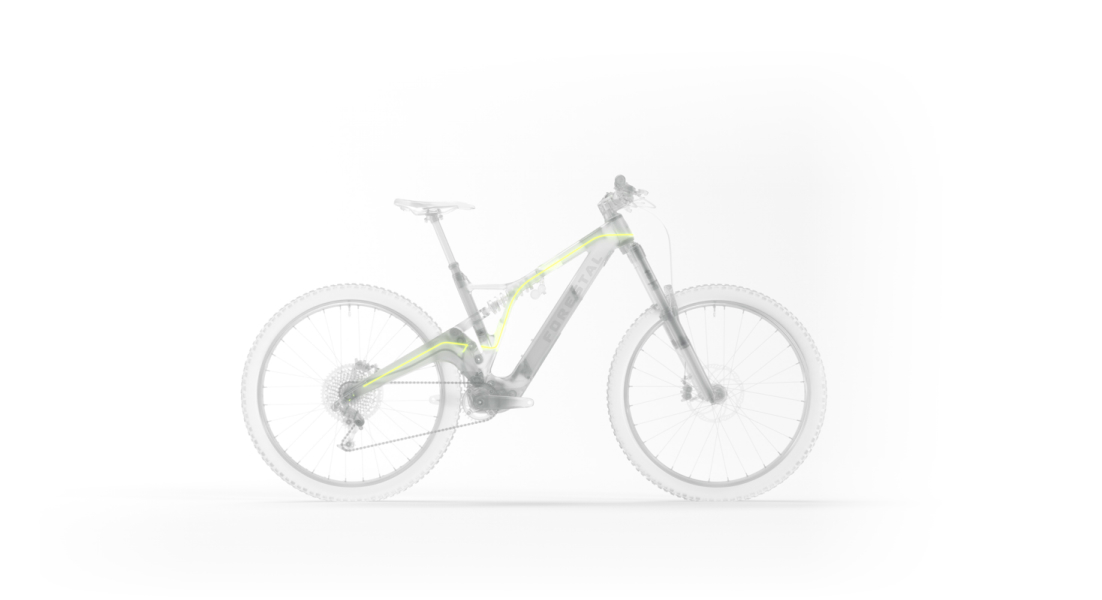
Specs at a glance: 60 Nm torque · ~450 W peak · 1.96 kg · 430 Wh internal battery · range extender cancelled
The Fazua Ride 60 is the second generation of Fazua’s lightweight motor system, originally developed under Porsche eBike Performance ownership. It powers bikes from Trek (some models), Bianchi, Focus, Cairn, Forestal and several boutique brands. However, Porsche has since announced it will no longer invest in Fazua, casting doubt on the platform’s long‑term viability.
What riders say online
- Torque: at 60 Nm, it delivers the highest torque of any lightweight motor — a meaningful advantage on steep, technical climbs where every newton meter counts. Riders transitioning from full‑power e‑bikes find the Ride 60 the least compromised in assist strength.
- Battery capacity: the 430 Wh internal battery is the largest in the lightweight segment. Real‑world range is 40–65 km in mixed mode. However, the promised 210 Wh range extender was cancelled, meaning 430 Wh is all you get — a significant limitation for long mountain rides compared to the Bosch SX’s battery flexibility.
- Ride feel: natural but not quite as ethereal as the TQ HPR50. The assist engagement is smooth but some riders detect a slight lag at very low cadences. At normal pedaling speeds, it feels excellent.
- Weight: at 1.96 kg, it is competitive but not the lightest. The 110 g difference vs the TQ is negligible in practice.
- Noise: quiet overall, with a faint high‑pitched whine under heavy load that some riders notice. Not intrusive but present in direct comparison with the TQ.
- Reliability: the original Fazua Evation system had mixed reliability reviews. The Ride 60 is a ground‑up redesign and motor hardware reliability reports are positive. However, the long‑term concern is not the motor itself but the company behind it — with Porsche exiting, spare parts availability, firmware updates and app maintenance are all uncertain.
- Ecosystem: the Fazua app allows assist level customization and firmware updates. Functional but less polished than TQ or Bosch. With Porsche’s exit, the future of app maintenance and OTA updates is unclear.
- ⚠️ Platform risk: Porsche’s decision to stop investing in Fazua, combined with the cancelled range extender, raises serious questions about the platform’s future. Spare parts, firmware updates and OEM adoption may all decline over time. Read our detailed analysis.
Verdict
Best for: bargain hunters only. The Fazua Ride 60 hardware is excellent — 60 Nm torque and 430 Wh battery remain best‑in‑class for the lightweight segment. But with Porsche pulling out and the range extender cancelled, we cannot recommend paying full price for a Fazua‑powered bike. If you find one at a steep discount (30–40% off), the motor will serve you well for years. At retail price, choose the TQ HPR50 or Bosch SX instead.
Bosch Performance Line SX — the ecosystem play

Specs at a glance: 55 Nm torque · ~600 W peak · 2.0 kg · 400–800 Wh batteries · Bosch Flow app
The Bosch Performance Line SX is Bosch’s entry into the lightweight motor segment, launched in 2023. It brings the full Bosch Smart System ecosystem to lighter bikes from brands like Scott, Cube, Cannondale, Lapierre and Moustache.
What riders say online
- Ecosystem advantage: the SX connects to the full Bosch Smart System: Flow app, eBike Connect, Kiox displays, OTA updates and range extender compatibility. For riders already invested in the Bosch ecosystem (perhaps from a full‑power e‑bike), this is a major draw.
- Battery flexibility: unlike TQ and Fazua, which use proprietary internal batteries, the Bosch SX supports the full range of Bosch PowerTube batteries (400–800 Wh) and the PowerMore range extender. You can spec a 400 Wh for minimum weight or 800 Wh for maximum range.
- Torque: 55 Nm places it between the TQ (50 Nm) and Fazua (60 Nm). Adequate for most trail situations.
- Peak power: Bosch claims ~600 W peak, which is notably higher than the TQ or Fazua. The sprint boost is noticeable on short, punchy climbs.
- Weight: at 2.0 kg, it is the heaviest motor in this comparison. Bikes built around it tend to weigh 18–20 kg — heavier than TQ or Fazua builds but still well under full‑power territory.
- Ride feel: good but not as refined as the TQ HPR50. Riders describe a slightly more “mechanical” feel compared to the TQ’s seamless assist. The eMTB dynamic mode helps bridge this gap.
- Noise: quiet but audible under heavy load. Comparable to the Fazua.
- Reliability: too new for long‑term data, but Bosch’s track record with the CX inspires confidence. Early adopter reports are positive.
Verdict
Best for: riders who want Bosch’s proven ecosystem, battery flexibility and dealer network in a lighter package. If you already own a Bosch‑powered e‑bike and want a lighter complement, or if maximum battery range matters more than minimum weight, the SX is the logical choice.
Mahle X35+ — the stealth specialist

Specs at a glance: 40 Nm torque · ~250 W peak · 1.6 kg · 250–350 Wh internal battery · rear hub motor
The Mahle X35+ is a rear hub motor — fundamentally different from the mid‑drive motors above. Designed by Mahle (the German automotive parts giant), it sits in the rear hub and is virtually invisible. It powers bikes from Orbea (Gain series), Look, Wilier, Basso and other brands that prioritize stealth aesthetics.
What riders say online
- Stealth factor: the defining characteristic. Bikes with the Mahle hub motor look identical to non‑assisted bikes. There is no bulge at the bottom bracket, no visible motor casing. For riders who don’t want to “look like they’re on an e‑bike,” this matters.
- Weight: at 1.6 kg for the motor unit, it contributes to total bike weights of 12–14 kg for road/gravel builds. This is genuine road bike territory.
- Noise: near silent. The hub motor produces a faint hum that is inaudible above 15 km/h.
- Assist feel: subtle and smooth, designed to feel like a gentle push rather than active assistance. It does not multiply your power — it adds a fixed boost. This feels very different from a mid‑drive.
- Torque limitation: 40 Nm through a hub motor delivers significantly less climbing assist than 40 Nm through a mid‑drive (which benefits from the drivetrain gear ratio). On steep off‑road climbs, the Mahle feels noticeably weaker than mid‑drives with similar torque numbers.
- Battery life: the smaller batteries (250–350 Wh) limit range to 30–50 km in mixed use. Adequate for road and gravel rides, but tight for mountain bike routes with significant climbing.
- Reliability: very good. Hub motors have fewer moving parts than mid‑drives and the Mahle units have a strong track record since 2019.
- Drawbacks: not suited for technical off‑road riding. The rear hub weight affects handling, and the limited torque struggles on loose, steep climbs. Best for road, gravel and light trail use.
Verdict
Best for: road and gravel riders who want invisible assist and a bike that looks and handles like a traditional bicycle. The Orbea Gain with Mahle X35+ is the benchmark for stealth e‑bikes. Not recommended for serious mountain biking.
Specialized SL 1.2 — the proprietary performer
Specs at a glance: 35 Nm torque · ~240 W peak · 1.95 kg · 320 Wh internal battery · optional 160 Wh range extender
The Specialized SL 1.2 is a custom motor developed with Mahle, used exclusively on the Specialized Turbo Levo SL and Creo SL. It is a mid‑drive unit integrated into Specialized’s proprietary frame design with the Mission Control app for deep customization.
What riders say online
- Integration: the SL 1.2 is designed specifically for Specialized frames, resulting in exceptionally clean frame lines and well‑balanced weight distribution. The Turbo Levo SL is widely regarded as one of the best‑looking light e‑MTBs.
- Mission Control app: one of the best motor tuning apps available. You can adjust peak power, assist levels and torque curves with granular control. Power‑users love it.
- Ride feel: smooth and natural, with a bias toward preserving the “analog bike” sensation. Riders describe it as the lightest touch of assist that makes steep climbs manageable without transforming the ride.
- Torque limitation: 35 Nm is the lowest of any mid‑drive in this comparison. On technical, steep climbs, riders above 75 kg notice the ceiling. It’s enough for moderate trails but struggles on the steepest terrain.
- Battery life: the 320 Wh internal battery provides 25–45 km in mixed trail use. The range extender adds 15–25 km. Adequate for most rides but limiting for full‑day alpine adventures.
- Reliability: good, though some riders report battery degradation after 2–3 years of heavy use. Specialized’s warranty coverage is solid.
- Lock‑in: completely proprietary. No other brand uses this motor, and service must go through Specialized dealers.
Verdict
Best for: Specialized loyalists who want a premium light e‑MTB with excellent frame integration and the Mission Control app. The Turbo Levo SL is a beautiful bike, but the lower torque and proprietary ecosystem are real limitations.
Mahle X20 — the minimalist’s choice
Specs at a glance: 23 Nm torque · ~250 W peak · 1.5 kg · 250 Wh internal battery · rear hub motor
The Mahle X20 is the latest and lightest evolution of Mahle’s hub motor platform. At just 1.5 kg with a compact 250 Wh battery, it enables bikes that weigh under 12 kg — practically indistinguishable from analog bikes in weight and appearance.
What riders say online
- Weight: the lightest complete motor system available. Period.
- Stealth: even more invisible than the X35+. Total bike weight under 12 kg for road builds.
- Assist level: minimal. The 23 Nm through a hub motor provides a gentle tailwind effect — enough to flatten moderate climbs but not enough to fundamentally change the ride on steep terrain.
- Battery life: the 250 Wh battery limits range to 25–40 km. Best for commuting and short road rides.
- Reliability: early reports positive. Simplified design with fewer failure points.
- Drawbacks: not suitable for mountain biking. The low torque and small battery are designed for road and urban use exclusively.
Verdict
Best for: road cyclists and commuters who want the absolute lightest, most invisible assist. Not suited for off‑road use.
Key factors for choosing a light motor
Mid‑drive vs hub motor
This is the fundamental decision in the light motor category:
- Mid‑drive (TQ, Fazua, Bosch SX, Specialized SL): power goes through the drivetrain, so you benefit from gear ratios on steep climbs. Better for off‑road use, more natural climbing feel, but more drivetrain wear.
- Hub motor (Mahle X35+, X20): power goes directly to the rear wheel. Simpler, quieter, stealthier, less drivetrain wear — but significantly less effective on steep climbs where you need low gearing.
Rule of thumb: if you will ride off‑road or on steep terrain, choose a mid‑drive. If you want stealth and ride mostly flat to moderate terrain (road, gravel, commuting), a hub motor is ideal.
Battery capacity and range planning
Light e‑bikes have smaller batteries by design. Plan accordingly:
| Motor | Battery | Real‑world range (mixed) | With extender |
|---|---|---|---|
| TQ HPR50 | 360 Wh | 30–55 km | 45–80 km |
| Fazua Ride 60 | 430 Wh | 40–65 km | N/A (cancelled) |
| Bosch SX | 400–800 Wh | 35–100 km | +25–50 km |
| Mahle X35+ | 250–350 Wh | 30–50 km | 40–65 km |
| Specialized SL | 320 Wh | 25–45 km | 40–70 km |
The Bosch SX stands alone in offering full‑size battery options, which makes it the range champion in this category.
When to choose light vs full‑power
| Choose light if… | Choose full‑power if… |
|---|---|
| Your rides are under 60 km | You need 80+ km range regularly |
| Trails are moderate to steep | Trails are consistently very steep (25%+) |
| You want to ride with motor off comfortably | You rarely ride without assist |
| Bike weight under 18 kg matters to you | Bike weight is secondary to assist power |
| You have good base fitness | You want maximum assist regardless of fitness |
For a look at full‑power alternatives, read our full‑power e‑bike motor comparison.
Decision table — which light motor for which rider
| Rider profile | Best motor | Why | Example bike |
|---|---|---|---|
| Natural trail feel | TQ HPR50 | Lightest, smoothest, most natural assist | Trek Fuel EXe, Pivot Shuttle SL |
| Max light‑motor torque | Fazua Ride 60 ⚠️ | 60 Nm, largest battery — but uncertain future | Forestal Siryon, Focus Jam² SL (buy only at deep discount) |
| Ecosystem and battery flex | Bosch SX | Bosch Flow app, up to 800 Wh, range extender | Scott Lumen eRIDE, Cube Stereo Hybrid SLX |
| Stealth road/gravel | Mahle X35+ | Invisible hub motor, lightest bikes | Orbea Gain, Look E‑765 |
| Premium integration | Specialized SL 1.2 | Mission Control app, beautiful frame design | Specialized Turbo Levo SL |
Bottom line: buy the TQ HPR50 (via Trek Fuel EXe or Pivot Shuttle SL) if you want the most natural ride feel and accept the smaller battery. Buy the Bosch SX if battery flexibility and the Bosch ecosystem matter most. Buy the Mahle X35+ if you want a stealth e‑bike for road and gravel. The Fazua Ride 60 has the best specs on paper but its future is uncertain after Porsche’s exit — only consider it at a significant discount.
Explore light e‑bikes and full‑power alternatives at our sports section.
Essential gear for light e‑bike riders
Light e‑bikes still need proper protection. A good helmet and knee pads are non‑negotiable for trail riding, and a GPS bike computer helps you monitor battery range alongside your ride data. For the off‑season, keep your fitness sharp with a home gym routine for MTB.
Related Posts
- Fazua Ride 60 Long‑Term Review: A Great Motor You Shouldn’t Buy (Unless It’s a Steal)
- Best Full‑Power e‑Bike Motors Compared: Shimano EP801 vs Bosch CX vs DJI Avinox
- ebikes.geeknite.com — Find the Best Full‑Suspension e‑Bike for Your Budget and Region
- Garmin Edge 1040 Review: The Best GPS for Serious Cyclists
- XC vs Trail Geometry Differences Explained
- Fox Launch Pro Knee Pads Review


